Loading…
The Language of Life (Part 5): The 'Virtual Lab'—How We Validate Generative Drugs In Silico
By Ryan Wentzel
3 Min. Read#Drug Discovery & Biology#digital-twin#in-silico-validation#systems-biology#drug-screening
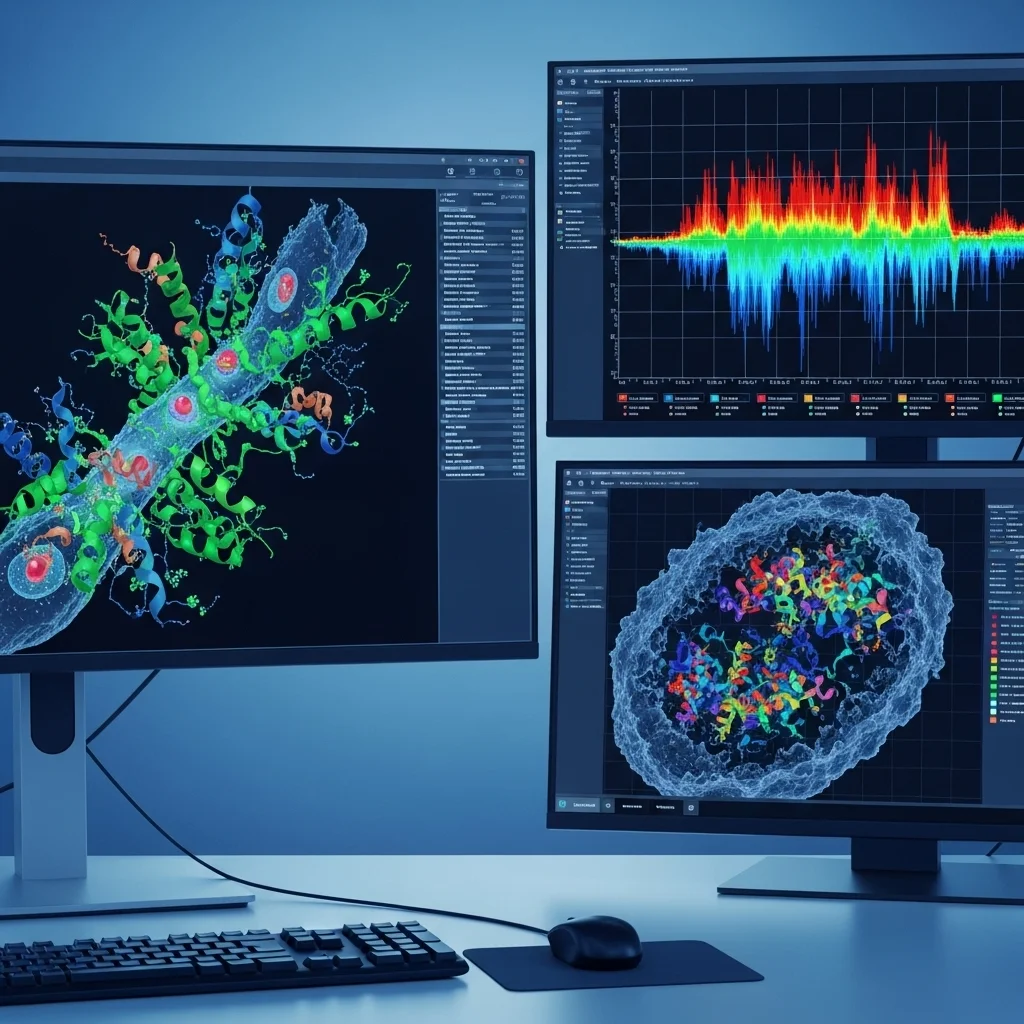
Table of Contents
- The Humanome "Digital Twin" Environment
- The In Silico Gauntlet: Two Key Validation Tests
- Off-Target Profiles as "Systemic Fingerprints"
- Conclusion
The Humanome "Digital Twin" Environment
A generative platform can propose drug candidates by the thousands. In the old world, R&D teams face a massive validation bottleneck. A medicinal chemist might spend six months synthesizing and testing the "top 3" candidates. This is slow and expensive, and it is part of the backdrop to the widely cited industry figure that >90% of drug candidates fail in clinical trials.
How can this gap be bridged? The idea is to test all 1,000 candidates in silico, before any of them reach the bench.
This is where Humanome.ai's approach brings two components together: generative AI (the "designer") and a Humanome "virtual lab."
A Humanome "Digital Twin" is not just a single protein model. It is a high-fidelity "computational model representing the structure, behavior, and context of a unique physical asset"—in this case, a human biological system.
It is a multi-scale model that integrates multi-omics data (genomics, proteomics, metabolomics) to create dynamic simulations of cellular and systems biology. The kinds of systems such twins aim to model include the human liver, the heart's electrical system, and, crucially, specific disease pathways like a cancer cell's signaling network.
The In Silico Gauntlet: Two Key Validation Tests
In this design, every generated candidate is run through the virtual lab. This "in-silico screening filter" performs two tests that go far beyond simple binding affinity.
Test 1: On-Target Efficacy (A Systems Biology View)
Simple "virtual screening" only tells you if a drug binds a target. This is not the same as efficacy.
The idea is not just to "dock" the drug, but to introduce the generated drug into the dynamic simulation of the disease pathway. The key question is: When the drug hits its target, does it actually disrupt the disease-causing network? Does it stop the modeled metabolic process or silence the aberrant signal? This aims to predict efficacy (does it stop the disease?)—not just affinity (does it stick?).
Test 2: Off-Target Toxicity (A Proteome-Wide View)
Most drugs fail in the clinic not because they miss their target, but because they hit unintended ones, causing toxicity.
To predict this, the approach calls for a proteome-wide in-silico screening panel: 3D structural models and predictive models (e.g., multi-task GNNs) for critical "anti-targets" known to cause toxicity:
- GPCRs: For signaling side effects
- Kinases: A major source of off-target activity
- Ion Channels: Especially the hERG channel for cardiotoxicity
- Liver Enzymes (e.g., P450s): For metabolic toxicity
Each candidate is run against this panel to generate a full "off-target profile", predicting its interaction probability against a broad set of critical proteins.
Off-Target Profiles as "Systemic Fingerprints"
This off-target profile is not just a "pass/fail" filter. It is a rich, high-dimensional representation of the drug's predicted systemic behavior. This "systemic fingerprint" is intended to be far more informative about in-vivo adverse reactions than a simple 2D chemical fingerprint.
This enables a recursive optimization. This "systemic fingerprint" becomes a new input for our Multi-Objective Optimization (MPO) from Parts 3 and 4. The generative model can then be prompted:
Generate(molecule) WHERE reward =
  (w1 * Affinity_Score) +
  (w2 * Efficacy_Score_in_Pathway) +
  (w3 * MINIMIZE(Systemic_Toxicity_Fingerprint))
This allows us to design for low systemic toxicity from the very beginning, not just screen for it later.
Conclusion
A "virtual lab" is the in-silico filter that makes it possible to "fail fast and cheap". The goal is to test a very large number of hypotheses and narrow them to the 100 or so candidates with the highest predicted probability of both efficacy and safety—the ones worth advancing to wet-lab testing.
But a computer simulation is only a theory. It is only as good as its data. In Part 6, we will explain how "closing the loop" connects a virtual lab to the real world and makes it smarter over time.
#digitalTwin #inSilicoValidation #systemsBiology #drugScreening #toxicityPrediction
About Ryan Wentzel
Ryan previously served as a PCI Professional Forensic Investigator (PFI) of record for 3 of the top 10 largest data breaches in history. With over two decades of experience in cybersecurity, digital forensics, and executive leadership, he has served Fortune 500 companies and government agencies worldwide.
Related Articles
Beyond Structure: Why Boltz-2 and the 'Interaction Era' Matter for Drug Discovery
Boltz-2 signals a shift from static structure prediction to dynamic interaction modeling—bridging the 'Affinity Gap' that has plagued deep learning in drug discovery.
8 Min. ReadRead more →
The Silent Boom: Forensic Attribution in the Age of Bio-Cybersecurity
When the 'boom' is microscopic and delayed by months, how do you trace the provenance of synthesized pathogens? A technical deep-dive into codon bias analysis, assembly scars, and the forensic frameworks required for 'Right of Boom' response in the bioeconomy.
7 Min. ReadRead more →
The Synthetic Chemist: How Multi-Agent AI Architectures Are Automating the Hit-to-Lead Frontier
An exhaustive analysis of 'In Silico' screening, Self-Driving Laboratories, and the Agentic Era of Drug Discovery—where autonomous AI systems orchestrate entire scientific workflows from hypothesis to physical verification.
12 Min. ReadRead more →