Loading…
Quantum Ready (Part 4): From 'Noisy' to 'Fault-Tolerant': The True Hurdles We Must Overcome
By Ryan Wentzel
12 Min. Read#Quantum#AI#Quantum Computing#Fault Tolerance#Error Correction
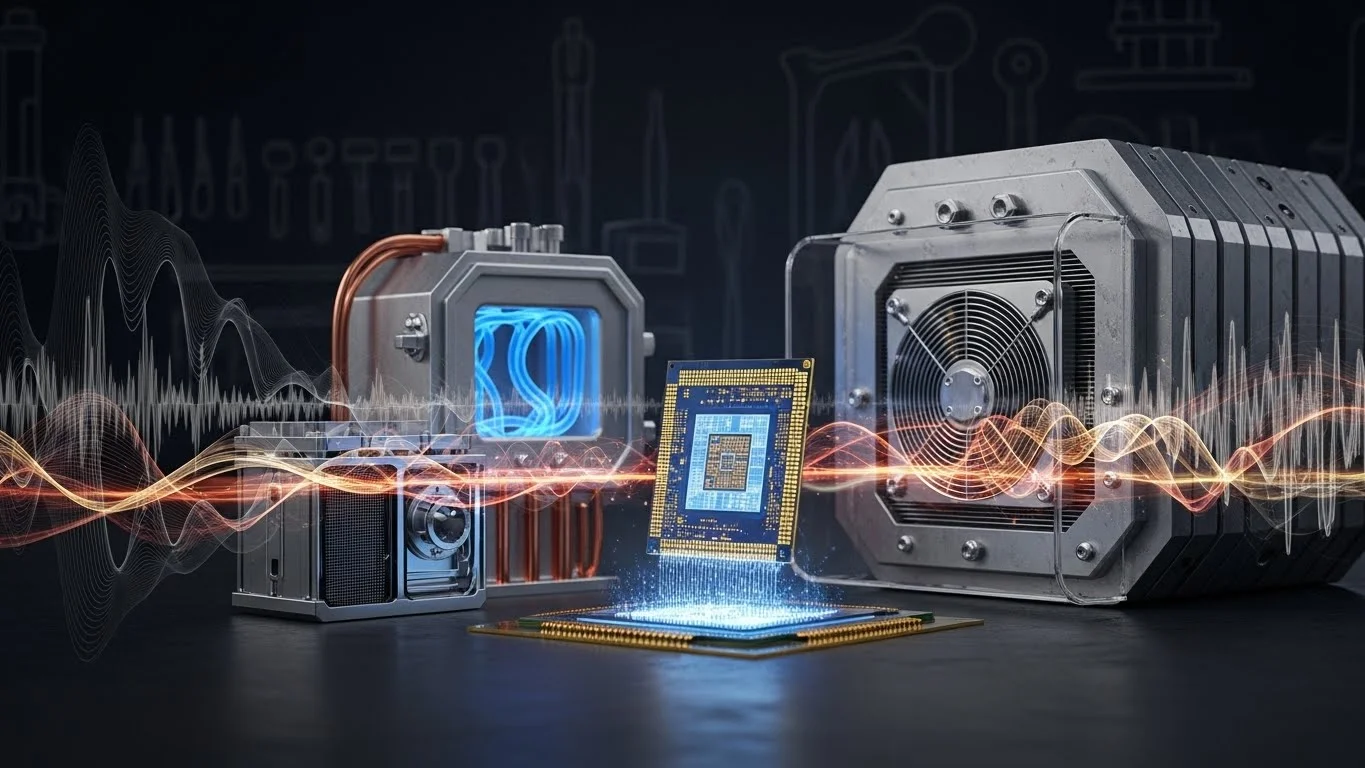
Table of Contents
- The Hardest Engineering Problem in History
- The Great Enemy: 'Noise' and Decoherence
- The Solution: Quantum Error Correction
- The Logical Qubit: A Massive Overhead
- Conclusion
The Hardest Engineering Problem in History
Building a fault-tolerant quantum computer may be the most demanding engineering challenge humanity has ever undertaken. It requires simultaneously solving problems across condensed matter physics, materials science, electrical engineering, control systems, cryogenics, software architecture, and manufacturing -- all while operating at the ragged edge of what the laws of physics permit.
To appreciate the difficulty, consider what a superconducting quantum computer demands. The quantum processor must be cooled to approximately 15 millikelvin -- roughly 0.015 degrees above absolute zero. This is colder than outer space (which averages about 2.7 Kelvin due to the cosmic microwave background). Achieving and maintaining this temperature requires a dilution refrigerator, a multi-stage cooling system the size of a large closet that uses a mixture of helium-3 and helium-4 isotopes. Each refrigerator costs hundreds of thousands to millions of dollars, consumes significant power, and requires specialized expertise to operate.
At these temperatures, the superconducting circuits exhibit quantum behavior. But maintaining that behavior is extraordinarily fragile. A single stray photon -- from thermal radiation, cosmic rays, or even radioactive decay in the materials surrounding the processor -- can knock a qubit out of its quantum state. The processor must be shielded from electromagnetic interference, mechanical vibration, and thermal fluctuations with extraordinary precision. The wiring that connects the chip to room-temperature control electronics must be carefully attenuated to prevent thermal noise from propagating down to the processor. Each qubit requires its own dedicated control line and readout channel, creating a wiring bottleneck as qubit counts scale.
And superconducting circuits are just one approach. The quantum computing industry is pursuing multiple hardware modalities, each with distinct engineering challenges and advantages.
Superconducting qubits (IBM, Google, Rigetti) are the most mature platform. Qubits are formed from Josephson junctions -- nanoscale structures where two superconductors are separated by a thin insulating barrier. Advantages include fast gate speeds (single-qubit gates in 20-50 nanoseconds, two-qubit gates in 50-300 nanoseconds), compatibility with semiconductor fabrication processes, and a mature control electronics ecosystem. Disadvantages include the extreme cooling requirements, relatively short coherence times (typically 100-300 microseconds for transmon qubits), limited native connectivity between qubits, and sensitivity to fabrication variability -- no two qubits are exactly alike.
Trapped ion qubits (IonQ, Quantinuum) use individual atomic ions confined in electromagnetic traps inside ultra-high vacuum chambers. The qubit states are encoded in the electronic energy levels of the ion. Laser pulses or microwave fields drive qubit operations. Advantages are impressive: coherence times of seconds to minutes (orders of magnitude longer than superconducting qubits), native all-to-all connectivity (any ion can interact with any other ion in the same trap zone), and identical qubits (every ytterbium-171 ion is physically identical to every other ytterbium-171 ion, eliminating fabrication variability). The primary disadvantage is speed -- gate operations take 10-100 microseconds, roughly 1,000 times slower than superconducting gates. Scaling is also challenging because ion traps become increasingly difficult to control as the number of ions grows, requiring complex trap architectures with multiple connected zones.
Photonic qubits (Xanadu, PsiQuantum) encode quantum information in properties of individual photons -- polarization, path, or timing. The compelling advantage is that photons are naturally immune to many types of noise and can operate at room temperature. Photonic systems also interface naturally with fiber-optic communication networks, making them attractive for quantum networking and distributed quantum computing. However, photons do not naturally interact with each other, making two-qubit gates extremely challenging. Photonic approaches typically rely on measurement-based quantum computing paradigms, where entanglement is created through specific measurement patterns rather than direct photon-photon interaction. Generating deterministic single photons on demand also remains an engineering challenge.
Neutral atom qubits (QuEra, Pasqal, Atom Computing) trap individual neutral atoms (typically rubidium or cesium) using focused laser beams called optical tweezers. Atoms are arranged in configurable 2D or 3D arrays, and qubit interactions are mediated through Rydberg states -- highly excited atomic states with very large electron orbits that interact strongly with neighboring atoms. Neutral atom platforms offer a compelling combination: large qubit counts (arrays of hundreds of atoms have been demonstrated), reconfigurable connectivity, and long coherence times. They are rapidly emerging as a serious contender for near-term quantum advantage.
Topological qubits (Microsoft) represent the most speculative but potentially most transformative approach. The idea is to encode quantum information in exotic quasiparticles called non-Abelian anyons, whose quantum states are inherently protected from local perturbations by the topology of the system. If realized, topological qubits would have dramatically lower intrinsic error rates, potentially reducing the error correction overhead by orders of magnitude. Microsoft announced a breakthrough in 2025 with its Majorana 1 chip, claiming to have demonstrated the topological qubit architecture, though independent verification and scaling remain ahead.
The Great Enemy: 'Noise' and Decoherence
Regardless of the hardware modality, every quantum computer faces the same fundamental adversary: decoherence. Decoherence is the process by which a qubit loses its quantum properties -- its superposition and entanglement -- through unwanted interaction with the environment. It is the central obstacle separating NISQ machines from fault-tolerant quantum computers.
Decoherence is characterized by two time constants that quantify how quickly quantum information is lost.
T1 (relaxation time) measures how long a qubit retains its energy state before spontaneously decaying. If you prepare a qubit in the |1> state, T1 tells you how long, on average, before it drops to the |0> state. For superconducting transmon qubits, T1 is typically 100-300 microseconds. For trapped ions, T1 can be seconds to minutes.
T2 (dephasing time) measures how long a qubit maintains the phase relationship of its superposition. A qubit in the state (|0> + |1>)/sqrt(2) has a definite phase relationship between its components. Environmental noise causes this phase to drift randomly (dephase), destroying the interference effects that quantum algorithms rely on. T2 is always less than or equal to 2*T1, and for superconducting qubits, it is often shorter -- typically 50-200 microseconds.
These numbers set a hard clock on quantum computation. A quantum algorithm must complete all its operations within a time window bounded by T1 and T2. If a circuit takes longer to execute than the coherence time, the quantum information degrades to noise before useful results can be extracted. This is why gate speed matters -- faster gates mean more operations can fit within the coherence window.
Gate error rates represent the other dimension of the noise problem. Every quantum gate operation has a finite probability of introducing an error. Current state-of-the-art two-qubit gate fidelities range from about 99.5% to 99.9%, depending on the platform. This means that out of every 1,000 two-qubit gates, between 1 and 5 will produce incorrect results. For algorithms like Shor's that require millions of gates, these error rates are completely inadequate -- the computation would drown in noise long before producing a meaningful answer.
Additional noise sources compound the problem. Readout errors mean that even if a computation completes perfectly, the measurement result may be wrong (typical readout fidelities are 97-99.5%). Crosstalk between neighboring qubits means that operating on one qubit can subtly perturb its neighbors. Leakage occurs when a qubit's state transitions outside the computational basis (from the |0>/|1> subspace to higher energy levels), introducing errors that are particularly difficult to detect and correct.
The cumulative effect of all these noise sources means that current quantum computers produce approximate, probabilistic results that must be run many times (hundreds or thousands of circuit executions, called "shots") and statistically averaged to extract useful signal from noise. This works for NISQ algorithms with shallow circuits but is fundamentally insufficient for the deep circuits required by algorithms like Shor's.
The Solution: Quantum Error Correction
Classical computers solved their reliability problem decades ago using error correction codes -- adding redundant bits that allow errors to be detected and corrected. The same principle applies to quantum computing, but with dramatically greater complexity.
The first challenge is the no-cloning theorem, which we encountered in Part 1. Classical error correction typically involves copying data to create redundancy. You cannot copy a quantum state. Quantum error correction must create redundancy without cloning -- a requirement that seemed paradoxical until Peter Shor (the same Shor who developed the factoring algorithm) and Andrew Steane independently developed the first quantum error correcting codes in the mid-1990s.
The key insight is that quantum error correction encodes a single logical qubit's worth of information across multiple physical qubits in an entangled state. Errors in individual physical qubits can be detected by performing syndrome measurements -- carefully designed measurements that reveal information about what error occurred without revealing (and thus disturbing) the actual quantum information being protected. This is like diagnosing a patient's illness without learning their private medical history -- you determine what went wrong without accessing the protected data.
The most promising error correction architecture for near-term implementations is the surface code, developed by Alexei Kitaev and refined by many others. The surface code arranges physical qubits in a 2D grid, with data qubits and measurement (ancilla) qubits alternating in a checkerboard pattern. Ancilla qubits are periodically measured to detect errors in neighboring data qubits without disturbing the encoded logical information.
The surface code has several practical advantages that make it the leading candidate for real hardware: it requires only nearest-neighbor interactions between qubits (which matches the connectivity of superconducting chip architectures), it has a relatively high error threshold (approximately 1% per operation, meaning that as long as physical error rates are below this threshold, adding more physical qubits improves logical qubit quality), and it can correct both bit-flip and phase-flip errors.
The concept of an error threshold is crucial. Below this threshold, quantum error correction works -- adding more physical qubits makes the logical qubit more reliable. Above this threshold, adding more qubits actually makes things worse because the error correction process itself introduces more errors than it corrects. Getting physical error rates below the threshold has been one of the primary engineering goals of the entire field.
The Logical Qubit: A Massive Overhead
Here is where the scale of the challenge becomes apparent. A single fault-tolerant logical qubit -- one reliable enough for algorithms like Shor's -- requires a large number of physical qubits dedicated to error correction. Current estimates for the surface code range from approximately 1,000 to 10,000 physical qubits per logical qubit, depending on the target logical error rate and the physical error rate of the underlying hardware.
Consider the implications. Running Shor's Algorithm to factor RSA-2048 requires approximately 4,000 logical qubits. At 1,000 physical qubits per logical qubit (an optimistic estimate assuming physical error rates well below threshold), that requires 4 million physical qubits. At 10,000 physical qubits per logical qubit, it requires 40 million. Current quantum computers have around 1,000 to 1,500 physical qubits. The gap is not merely large -- it spans multiple orders of magnitude.
This is why Google's Willow chip, announced in late 2024, represented such a significant milestone. Willow demonstrated, for the first time, that quantum error correction actually works as theory predicts at a meaningful scale. Specifically, Google showed that increasing the size of the surface code from a distance-3 to a distance-5 to a distance-7 code reduced the logical error rate exponentially -- each increase in code distance cut the error rate roughly in half. This "below-threshold" operation is the critical prerequisite for building fault-tolerant quantum computers. Prior to Willow, it was an open question whether real hardware could achieve this in practice, not just in theory.
The major quantum computing companies have published roadmaps that chart the path from current hardware to fault-tolerant systems.
IBM has laid out an ambitious trajectory: the Heron processor (133 qubits, 2024), followed by increasingly capable systems targeting 100,000+ qubits by 2033. IBM's approach involves modular architectures that connect multiple quantum processors through classical and quantum interconnects, avoiding the need to fabricate a single monolithic chip with millions of qubits.
Google has articulated milestone-driven goals following the Willow demonstration: scaling surface codes to lower logical error rates, demonstrating useful logical qubit operations, and ultimately building a system capable of running commercially relevant algorithms. Google's roadmap targets a "useful, error-corrected quantum computer" by the end of the decade, though "useful" here refers to specific computational tasks rather than general-purpose computing.
Microsoft is betting that topological qubits will dramatically reduce the error correction overhead, potentially requiring far fewer physical qubits per logical qubit. If the approach works as hoped, it could provide a shortcut past the scaling wall that other modalities face. However, topological qubits are the least mature technology, and significant questions remain about manufacturability and scalability.
Quantinuum and IonQ are pursuing trapped-ion approaches with inherently higher gate fidelities, potentially requiring fewer physical qubits per logical qubit due to lower baseline error rates. Quantinuum has demonstrated some of the highest gate fidelities in the industry (two-qubit gate fidelities exceeding 99.8%) and has executed small-scale error correction demonstrations.
What does fault-tolerant quantum computing (FTQC) actually require? Beyond the raw qubit count, several additional engineering challenges must be solved simultaneously:
- Control electronics scalability: Each qubit requires dedicated control signals. Managing millions of control lines with the required precision and timing is an engineering challenge comparable to the qubit physics itself. Research into cryogenic control electronics (placing some control systems inside the refrigerator to reduce wiring) and multiplexed control schemes is active.
- Decoder speed: Error correction requires classifying and correcting errors in real-time, faster than new errors accumulate. The classical decoder that processes syndrome measurements must operate at microsecond timescales with increasing code distances -- a non-trivial computational challenge.
- Fabrication consistency: For superconducting qubits, manufacturing millions of Josephson junctions with sufficiently uniform properties requires fabrication advances comparable to those in the semiconductor industry's transition to each new process node.
- System integration: A fault-tolerant quantum computer is not just a chip -- it is a full stack including cryogenic systems, control electronics, classical co-processors, networking, software, and compilers, all operating in coordination.
Realistic timeline estimates for a cryptographically relevant fault-tolerant quantum computer range from the early 2030s (optimistic, assuming continued rapid progress) to the 2040s (conservative, accounting for unforeseen engineering obstacles). Most expert assessments cluster around the mid-2030s as the earliest plausible window, though significant uncertainty remains.
Conclusion
The path from today's noisy, intermediate-scale quantum computers to fault-tolerant machines capable of running algorithms like Shor's is not merely a matter of building more qubits. It requires simultaneously reducing error rates below threshold, implementing error correction at massive scale, solving the control electronics bottleneck, and integrating all of these advances into a coherent system.
Google's Willow demonstration proved that the physics works -- error correction below threshold is achievable on real hardware. The remaining challenges are primarily engineering, not physics, which is cause for cautious optimism. Engineering challenges, given sufficient investment and talent, tend to be solvable on timescales of years to decades.
But the scale of investment required is staggering, and the engineering complexity is without precedent. The organizations and nations that sustain focused effort on these challenges will shape the quantum future. In the final installment of this series, we turn from the hardware challenge to the strategic imperative: how organizations should prepare for the quantum transition through crypto-agility and a structured readiness playbook.
About Ryan Wentzel
Ryan previously served as a PCI Professional Forensic Investigator (PFI) of record for 3 of the top 10 largest data breaches in history. With over two decades of experience in cybersecurity, digital forensics, and executive leadership, he has served Fortune 500 companies and government agencies worldwide.
Related Articles
Taming the LLM: Using Finite-State Machines to Prevent Hallucinations in AI Workflows
Hallucinations are not a prompt problem—they are an architecture problem. Here is how wrapping LLM calls in a Finite-State Machine transforms a probabilistic model into a predictable, inspectable software component you can ship to paying customers.
6 Min. ReadRead more →
Embracing the Cycle: A Pragmatic Look at TDD in Ruby on Rails
How Red–Green–Refactor keeps SaaS codebases shippable as they scale — and why pragmatic TDD pays compounding dividends for Rails teams.
5 Min. ReadRead more →
The Algorithmic Trust Paradox: How iOS 26 and FinanceKit Are Rewiring Fintech After the AI Hallucination Crisis
How Apple Intelligence hallucinations exposed fragile market microstructure, and why iOS 26's Liquid Glass UI and FinanceKit API are fundamentally reshaping fintech data provenance, algorithmic trading, and the death of screen scraping.
6 Min. ReadRead more →