Loading…
Quantum Ready (Part 1): Not Just a Faster PC: Why Qubits and Superposition Change Everything
By Ryan Wentzel
10 Min. Read#Quantum#AI#Quantum Computing#Qubit#Superposition
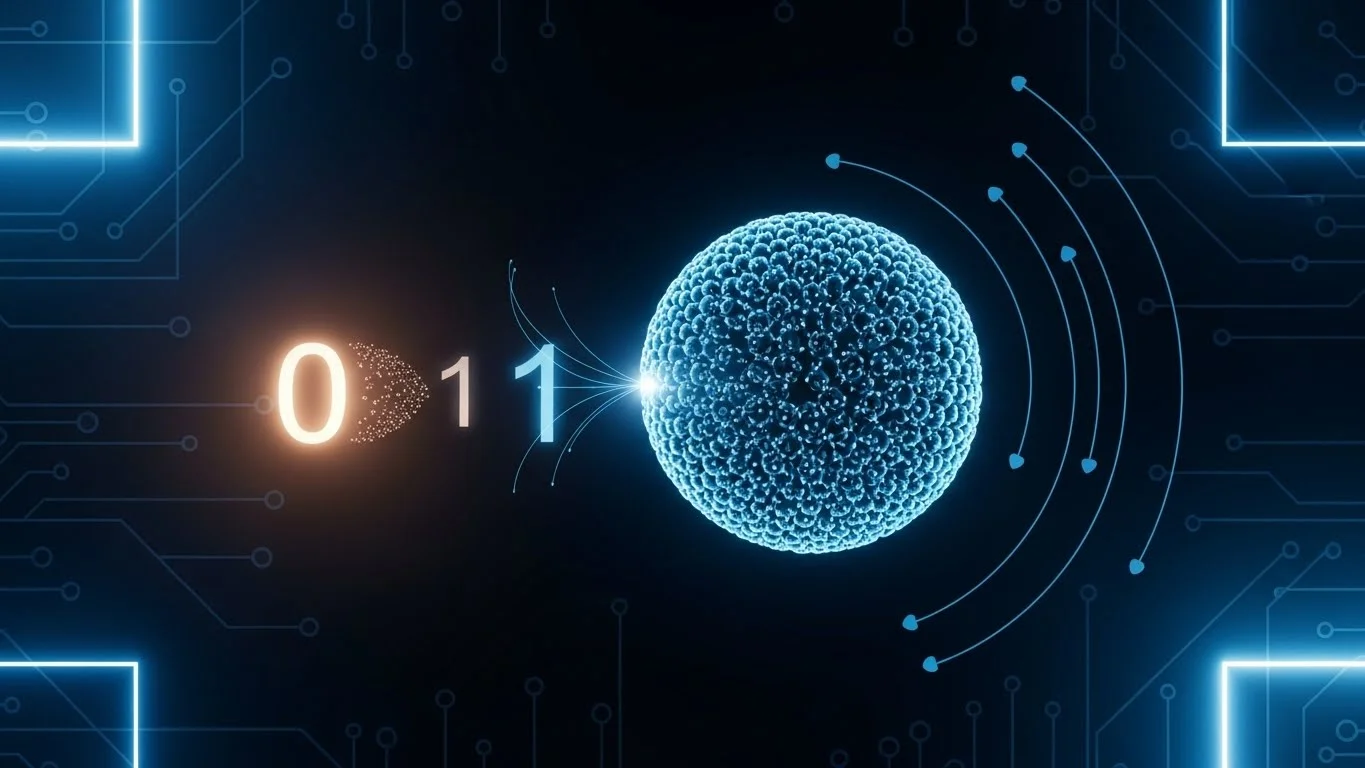
Table of Contents
- The World Built on 0s and 1s
- The Qubit: A New Dimension of Data
- The Real Magic: Entanglement and Scale
- Conclusion
The World Built on 0s and 1s
Every piece of digital technology you interact with today -- your phone, your laptop, the server processing your bank transaction, the satellite relaying your GPS coordinates -- operates on a deceptively simple foundation: the binary digit. A bit is either 0 or 1, on or off, true or false. From this humble building block, we have constructed the entire digital world.
At the physical level, classical computing works through transistors, which are essentially tiny electronic switches etched onto silicon wafers. When voltage is applied to a transistor's gate, it allows current to flow (representing a 1). When no voltage is applied, no current flows (representing a 0). Modern processors pack billions of these transistors onto chips smaller than your fingernail. An Apple M-series chip, for example, contains roughly 20 billion transistors, each one toggling between those two states billions of times per second.
These transistors are organized into logic gates -- AND, OR, NOT, XOR, and others -- that perform the fundamental operations of Boolean algebra. An AND gate outputs 1 only if both inputs are 1. An OR gate outputs 1 if either input is 1. A NOT gate flips the input. By combining these gates in increasingly complex arrangements, engineers build circuits that can add numbers, compare values, store data, and execute instructions. Every application you have ever used, every algorithm ever deployed, every AI model ever trained reduces to an extraordinarily long sequence of these binary logic operations.
This model has served us remarkably well. For roughly five decades, the semiconductor industry rode the wave of Moore's Law -- Gordon Moore's 1965 observation that the number of transistors on a chip roughly doubles every two years. This exponential scaling delivered predictable, compounding performance gains that powered the information age. Your smartphone has more raw computing power than the mainframes that guided Apollo astronauts to the moon.
But Moore's Law is hitting physical limits. As transistors shrink below 5 nanometers, quantum mechanical effects that engineers spent decades trying to suppress -- electron tunneling, thermal noise, leakage current -- become unavoidable. You cannot make a switch smaller than an atom. The industry has responded with creative workarships: 3D chip stacking, new materials like gallium nitride, specialized accelerators for AI workloads. These innovations extend classical computing's runway, but they do not change its fundamental nature. A classical computer, no matter how fast, processes information one state at a time. Each bit is definitively 0 or 1 at any given moment.
This is not a limitation for most everyday tasks. But there are classes of problems -- simulating molecular interactions, optimizing complex logistics networks, breaking certain cryptographic codes -- where the number of possible states grows so explosively that no classical computer, no matter how powerful, can explore them in any reasonable timeframe. A modest protein folding simulation might involve exploring more configurations than there are atoms in the observable universe.
This is precisely where quantum computing enters the picture. Not as a faster version of what we already have, but as a fundamentally different approach to processing information.
The Qubit: A New Dimension of Data
The quantum bit, or qubit, is the foundational unit of quantum information. Unlike a classical bit, which must be in one of two definite states, a qubit can exist in a superposition of both states simultaneously. This is not a metaphor or an approximation -- it is a direct consequence of quantum mechanics, the physics governing particles at the atomic and subatomic scale.
To build intuition, consider a coin. A classical bit is like a coin lying on a table: it is either heads or tails. You look at it, and the answer is definitive. A qubit, by contrast, is like a coin spinning in the air. While it spins, it is not heads and it is not tails -- it exists in a combination of both possibilities. Only when you catch the coin (measure the qubit) does it "collapse" into a definite outcome.
But the coin analogy, while helpful, undersells the precision of what is happening. Technically, a qubit's state is described as a linear combination of two basis states, written in Dirac notation as |0> and |1>. The qubit's state is alpha|0> + beta|1>, where alpha and beta are complex numbers called probability amplitudes. The probability of measuring 0 is |alpha|^2, and the probability of measuring 1 is |beta|^2, with the constraint that |alpha|^2 + |beta|^2 = 1. This means a qubit's state can be represented as a point on the surface of a sphere (the Bloch sphere), giving it a continuous, rich state space that a classical bit simply does not possess.
The critical insight is that while a qubit is in superposition, quantum operations can manipulate both the |0> and |1> components simultaneously. This is not the same as classical parallelism, where you run multiple processors each handling one task. It is a single physical system encoding and processing information in a fundamentally richer way.
So how do you actually build a qubit? Several physical implementations exist, each with distinct advantages and challenges.
Superconducting qubits are the approach used by IBM and Google. These are tiny circuits made from superconducting materials (typically aluminum on silicon) cooled to approximately 15 millikelvin -- colder than outer space. At these temperatures, electrical resistance vanishes, and the circuit behaves as a quantum system. The qubit states correspond to different energy levels of the circuit. Superconducting qubits are fast (gate operations in nanoseconds) and leverage existing semiconductor fabrication techniques, but they have relatively short coherence times and require extreme cooling infrastructure.
Trapped ion qubits are the approach championed by IonQ and Quantinuum. Individual atoms (often ytterbium or barium ions) are suspended in electromagnetic fields inside a vacuum chamber. The qubit states correspond to different energy levels of the ion's electron. Trapped ions boast excellent coherence times and high gate fidelities, but gate operations are slower (microseconds) and scaling to large numbers of ions in a single trap is mechanically challenging.
Photonic qubits use individual particles of light. Companies like Xanadu and PsiQuantum pursue this approach, encoding information in properties of photons such as polarization or path. Photonic systems can operate at room temperature and naturally interface with fiber-optic networks, but generating single photons on demand and making them interact (photons do not naturally interact with each other) presents significant engineering hurdles.
Regardless of the physical implementation, one fundamental rule governs all qubits: measurement destroys superposition. When you measure a qubit, you get either 0 or 1, with probabilities determined by the amplitudes. The superposition is gone. This is not a technological limitation -- it is a law of physics. It means quantum algorithms must be carefully designed to extract useful information through the structure of their computation, not by peeking at intermediate states.
Related to this is the no-cloning theorem, one of the most consequential results in quantum information theory. It states that it is physically impossible to create an identical copy of an arbitrary unknown quantum state. You cannot duplicate a qubit the way you copy a classical bit. The proof is elegant: cloning would require a linear operation that maps any input state to two copies of itself, but linearity makes this impossible for arbitrary superposition states. The operation that copies |0> to |0>|0> and |1> to |1>|1> would, by linearity, map a superposition state to an entangled state -- not two independent copies.
This has profound implications across quantum technology. It makes certain types of eavesdropping inherently detectable, because an interceptor cannot copy a quantum state without disturbing it -- this is the foundation of quantum key distribution protocols like BB84. It fundamentally complicates quantum error correction, because you cannot simply back up quantum data by making copies the way classical error correction uses redundant copies of bits. And it means that quantum information must be handled with fundamentally different strategies than classical data -- strategies we will explore in detail in Part 4 of this series when we discuss quantum error correction.
The Real Magic: Entanglement and Scale
Superposition gives individual qubits their power, but the true revolution emerges when multiple qubits interact through a phenomenon called quantum entanglement. Einstein famously called it "spooky action at a distance," and while the phrase has become a cliche, the underlying physics remains one of the most remarkable features of our universe.
When two qubits become entangled, their quantum states become correlated in a way that has no classical analog. Measuring one qubit instantaneously determines something about the state of the other, regardless of the physical distance between them. If you prepare two qubits in the entangled Bell state (|00> + |11>)/sqrt(2) and then measure the first qubit, you will find it is either 0 or 1 with equal probability. But here is the remarkable part: if you find the first qubit in state 0, the second qubit will also be in state 0, guaranteed. If the first is 1, the second is 1. This correlation holds whether the qubits are nanometers apart or on opposite sides of the planet.
This is not because one qubit is "signaling" the other. Bell's theorem, experimentally confirmed many times since the 1980s (and earning the 2022 Nobel Prize in Physics for Alain Aspect, John Clauser, and Anton Zeilinger), proves that these correlations cannot be explained by any local hidden variable theory. The qubits do not secretly "decide" their outcomes in advance. The correlations are genuinely quantum mechanical and emerge only upon measurement.
Entanglement is not just a curiosity -- it is a computational resource. It allows quantum computers to create correlations between qubits that encode information about the global structure of a problem, enabling certain algorithms to find solutions that would require exhaustive classical search.
The scaling implications are staggering. A single qubit holds a superposition of 2 states. Two qubits hold a superposition of 4 states (|00>, |01>, |10>, |11>). Three qubits hold 8. The pattern is exponential: N qubits can simultaneously represent 2^N states. Just 50 qubits can represent over one quadrillion states simultaneously -- more than the most powerful classical supercomputers can efficiently simulate. At 300 qubits, the number of simultaneous states exceeds the number of atoms in the observable universe.
This exponential state space is what gives quantum computers their potential advantage for certain problems. But a critical caveat is necessary here, because it is the most common misconception about quantum computing: quantum computers are not simply faster classical computers. They do not take your existing algorithms and run them faster. They solve fundamentally different problem classes using fundamentally different algorithmic strategies.
A classical computer excels at sequential, deterministic tasks. Quantum computers excel at problems that involve exploring vast solution spaces with particular mathematical structure -- problems where quantum interference (the constructive and destructive combination of probability amplitudes) can amplify correct answers and suppress incorrect ones. Shor's algorithm for factoring large numbers, Grover's algorithm for searching unsorted databases, and variational algorithms for simulating molecular chemistry all exploit this quantum interference effect.
For many everyday tasks -- word processing, web browsing, streaming video, running a database -- a quantum computer offers no advantage whatsoever. It is not a replacement for classical computing. It is a new tool for problems that classical computers fundamentally struggle with.
It is worth emphasizing this point with concrete examples. Grover's Algorithm provides a quadratic speedup for searching unsorted databases -- useful, but not the revolutionary exponential advantage that headlines suggest. It reduces a search through N items from N steps to roughly sqrt(N) steps. Impressive, but a classical computer with twice the clock speed achieves a similar practical effect. The truly transformative quantum algorithms -- Shor's for factoring, quantum simulation for chemistry, certain optimization algorithms -- exploit specific mathematical structure in the problem that maps onto quantum interference patterns. Problems without that structure gain little or no benefit from quantum hardware.
Understanding this distinction is essential for anyone evaluating quantum computing's impact on their organization. The question is not "when will quantum computers replace our servers?" The answer to that is never. The right question is "which of our hardest problems have the mathematical structure that quantum algorithms can exploit?" That framing separates productive quantum strategy from hype.
Conclusion
Quantum computing represents a genuine paradigm shift, not an incremental upgrade. Classical computers process information through deterministic binary switches, and they have taken us extraordinarily far. But certain problems -- molecular simulation, cryptographic factoring, complex optimization -- require exploring state spaces so vast that no amount of classical hardware can address them efficiently.
Qubits, through superposition and entanglement, access an exponentially larger computational space. But they are not magic. They require carefully designed algorithms that exploit quantum interference to amplify useful answers. They are fragile, difficult to build, and complementary to (not replacements for) classical systems.
In the next installment of this series, we will examine the most consequential near-term implication of quantum computing: its ability to break the cryptographic systems that protect virtually all digital communication and commerce. Understanding qubits and superposition is the foundation -- understanding the threat they pose to encryption is where theory meets urgent, practical reality.
At the beginning
Read Next →
Keep Exploring
About Ryan Wentzel
Ryan previously served as a PCI Professional Forensic Investigator (PFI) of record for 3 of the top 10 largest data breaches in history. With over two decades of experience in cybersecurity, digital forensics, and executive leadership, he has served Fortune 500 companies and government agencies worldwide.
Related Articles
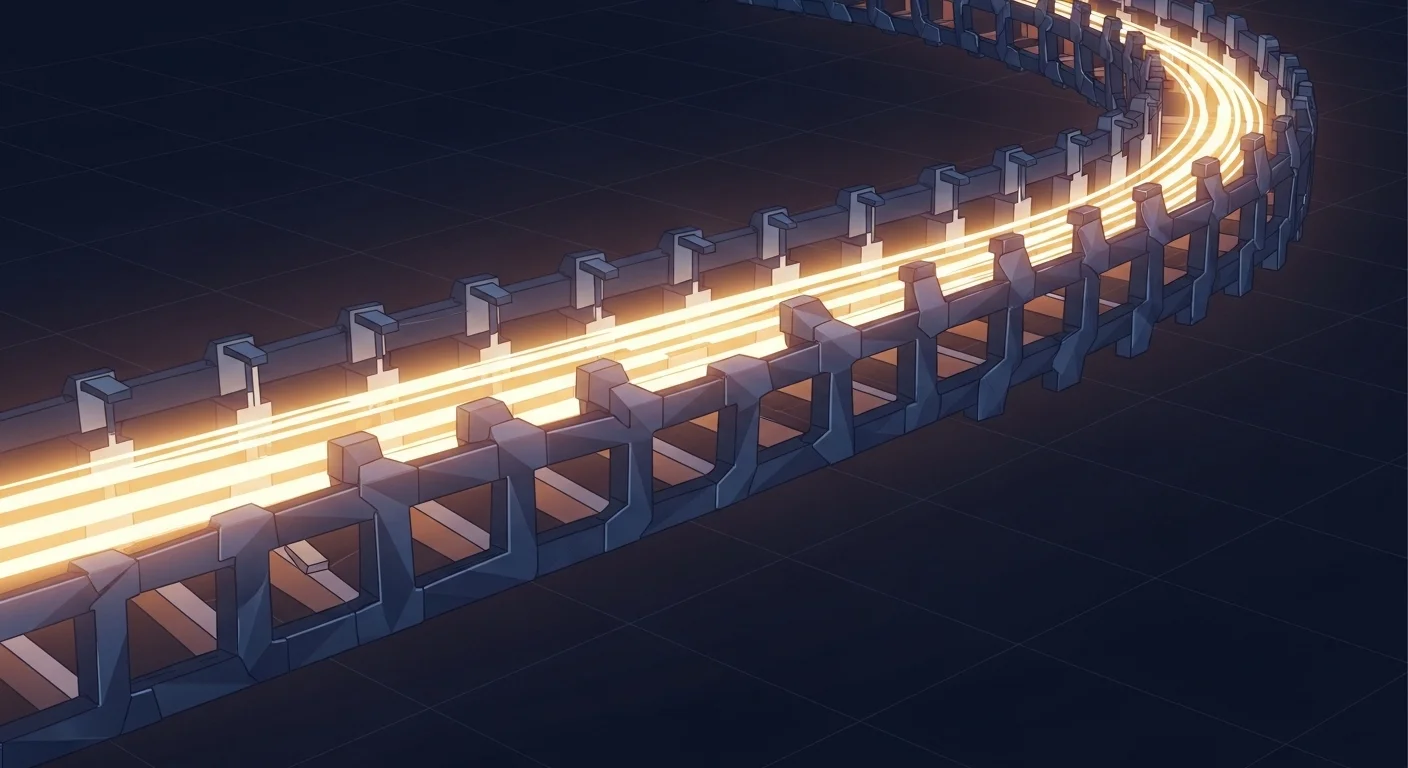
Taming the LLM: Using Finite-State Machines to Prevent Hallucinations in AI Workflows
Hallucinations are not a prompt problem—they are an architecture problem. Here is how wrapping LLM calls in a Finite-State Machine transforms a probabilistic model into a predictable, inspectable software component you can ship to paying customers.
6 Min. ReadRead more →
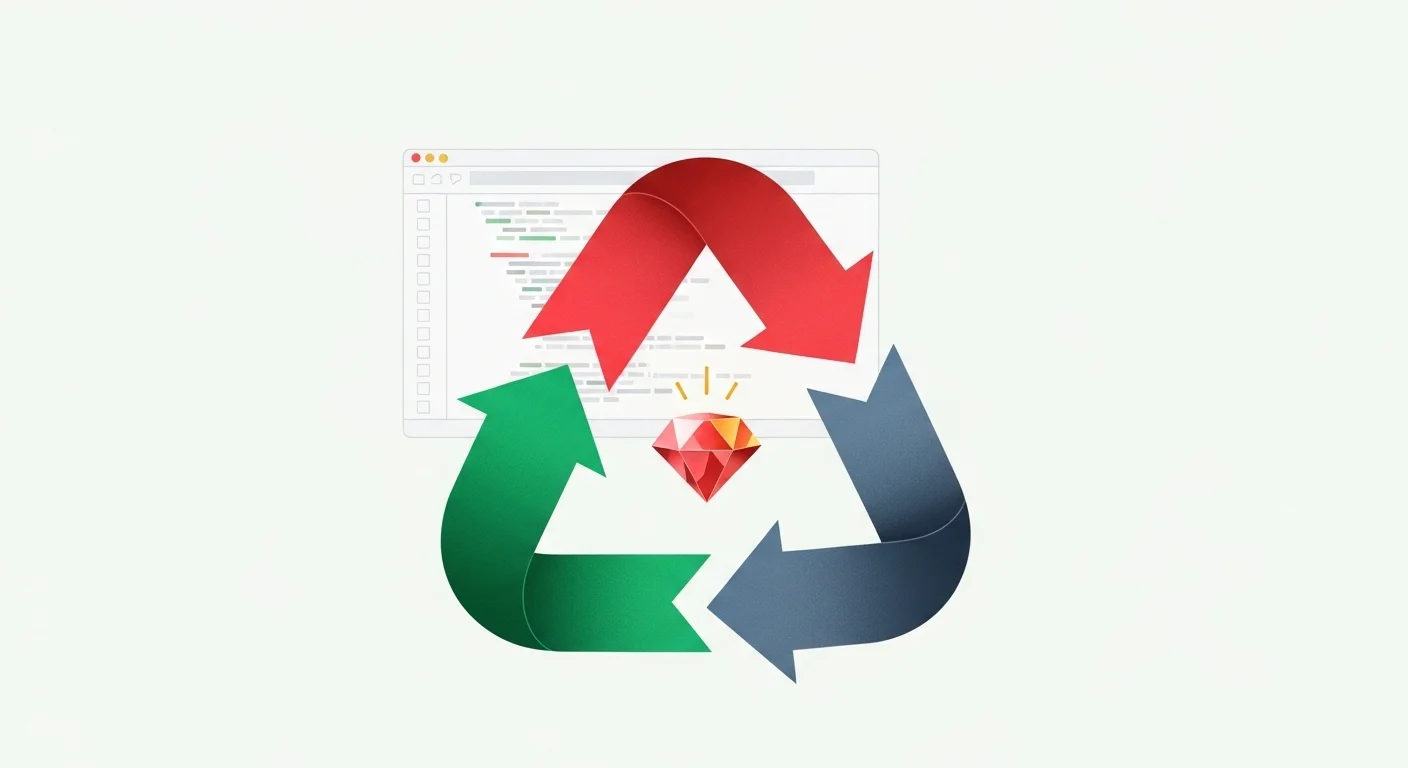
Embracing the Cycle: A Pragmatic Look at TDD in Ruby on Rails
How Red–Green–Refactor keeps SaaS codebases shippable as they scale — and why pragmatic TDD pays compounding dividends for Rails teams.
5 Min. ReadRead more →
The Algorithmic Trust Paradox: How iOS 26 and FinanceKit Are Rewiring Fintech After the AI Hallucination Crisis
How Apple Intelligence hallucinations exposed fragile market microstructure, and why iOS 26's Liquid Glass UI and FinanceKit API are fundamentally reshaping fintech data provenance, algorithmic trading, and the death of screen scraping.
6 Min. ReadRead more →