Loading…
Predictive Legal Analytics: The Next Frontier
By Ryan Wentzel
6 Min. Read#lawvora#ai#legal#contracts#document review
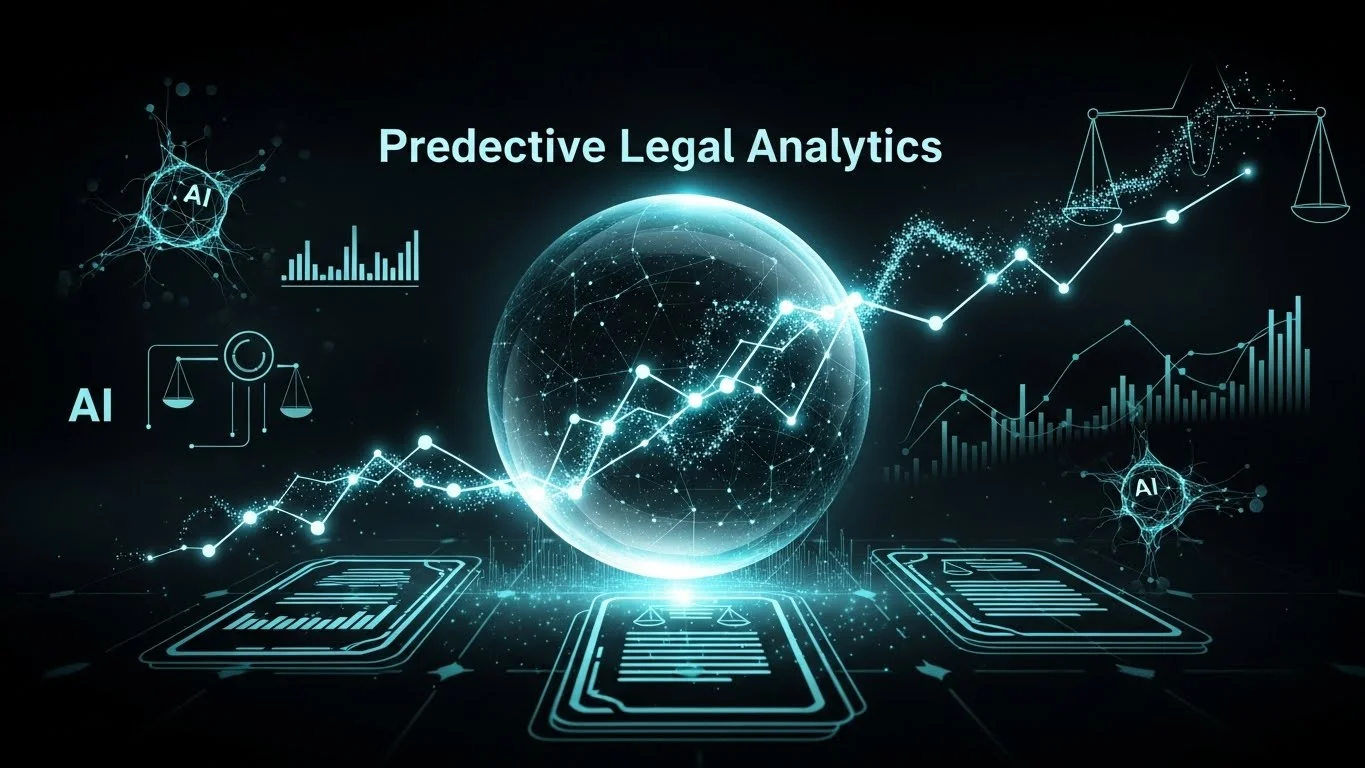
Legal practice has always involved predicting outcomes—estimating settlement values, assessing litigation risk, forecasting judicial decisions. But these predictions relied on attorney experience, intuition, and limited data samples. Predictive legal analytics powered by AI transforms these educated guesses into data-driven forecasts, analyzing millions of cases to provide insights no human could match.
Table of Contents
- The Limits of Traditional Prediction
- The Data Advantage
- Core Predictive Applications
- Transactional Predictions
- Implementation and Use Cases
- The Technology Behind Predictions
- Accuracy and Limitations
- Ethical and Professional Considerations
- Competitive Advantages
- Future Developments
- Implementation Strategy
- The Competitive Imperative
- Conclusion
The Limits of Traditional Prediction
Attorneys have always made predictions based on personal experience with limited case sample, subjective assessment of similarities, memory-dependent pattern recognition, and jurisdiction-specific intuition. Even the most experienced attorneys have seen only a tiny fraction of relevant cases, leading to blind spots, inconsistent predictions, and missed patterns.
The Data Advantage
AI predictive analytics leverage comprehensive datasets including millions of court decisions across jurisdictions, settlement agreements and outcomes, discovery production and costs, motion success rates by judge and attorney, jury verdict databases, and regulatory enforcement actions. This data foundation enables pattern identification impossible for humans to detect.
Core Predictive Applications
Litigation Outcome Prediction
AI can estimate win probability based on case facts, judge, opposing counsel, and jurisdiction. Systems analyze case type and legal issues, factual patterns and evidence, judicial tendencies and history, attorney track records, and similar case outcomes to provide percentage likelihood of success.
Settlement Value Forecasting
Predictive models estimate fair settlement ranges by analyzing comparable verdicts and settlements, damages calculations and precedents, jurisdiction-specific award patterns, judge and jury tendencies, and cost of litigation versus settlement economics.
Discovery Cost Prediction
AI forecasts e-discovery expenses before starting review by estimating document volumes requiring review, predictive coding accuracy rates, attorney review hours needed, vendor and technology costs, and timeline for completion.
Motion Success Probability
Before filing or opposing a motion, AI can predict likelihood of success based on motion type and legal arguments, judge's prior rulings on similar motions, persuasiveness of supporting authorities, procedural posture and timing, and opposing counsel's typical strategies.
Jury Selection Optimization
Predictive analytics inform voir dire strategy through demographic pattern analysis, juror questionnaire assessment, social media and background analysis, verdict prediction by juror profile, and optimal panel composition modeling.
Transactional Predictions
Deal Term Negotiation
AI predicts likely negotiation outcomes by analyzing market standard provisions, historical concession patterns, counterparty negotiation history, competitive pressure dynamics, and optimal compromise positions.
Contract Breach Risk
Predictive models assess likelihood of contract breach through party performance history, industry compliance rates, financial health indicators, market condition analysis, and relationship quality metrics.
Regulatory Approval Timing
AI forecasts regulatory review timelines by analyzing agency processing speeds, similar application outcomes, political and economic factors, and staffing and resource levels.
Implementation and Use Cases
Pre-Litigation Assessment
Before accepting a case, predict outcomes to make informed decisions about case acceptance risk, fee arrangement structures, resource allocation planning, and client counseling on expectations.
Budget Forecasting
AI enables accurate legal spend prediction through matter cost modeling, staffing level optimization, timeline estimation, and contingency planning for complications.
Portfolio Risk Management
For legal departments managing contract portfolios, predictive analytics identify high-risk agreements, prioritize remediation efforts, forecast potential liabilities, and optimize insurance coverage.
Strategic Planning
Firms use predictive analytics for practice area investment decisions, geographic expansion planning, talent acquisition priorities, and technology investment ROI.
The Technology Behind Predictions
Machine Learning Models
Predictive systems employ various techniques including supervised learning from labeled data, natural language processing of case text, neural networks for complex patterns, ensemble methods combining models, and continuous learning from new outcomes.
Feature Engineering
Success requires identifying relevant variables such as case characteristics and facts, party and attorney attributes, judicial and jurisdictional factors, procedural history and timing, and economic and industry context.
Model Validation
Ensuring accuracy demands rigorous testing through historical data backtesting, cross-validation across datasets, accuracy metrics and confidence intervals, bias detection and mitigation, and continuous performance monitoring.
Accuracy and Limitations
What AI Predicts Well
High accuracy areas include outcome probabilities for routine matters, settlement ranges for common cases, discovery costs for standard reviews, and motion success in established areas.
Uncertainty Factors
Predictions are less reliable for novel legal issues, unexpected factual developments, judicial departures from patterns, jury unpredictability in some jurisdictions, and rapidly evolving legal areas.
Confidence Intervals
Good predictive systems provide not just predictions but confidence ranges, acknowledging uncertainty and providing probability distributions rather than point estimates.
Ethical and Professional Considerations
Duty of Competence
Attorneys must understand predictive analytics capabilities and limitations, validate predictions before relying on them, explain methodology to clients, and maintain independent judgment.
Transparency with Clients
Ethical practice requires disclosing use of predictive analytics, explaining confidence levels and uncertainties, discussing how predictions inform strategy, and documenting prediction basis in files.
Avoiding Over-Reliance
Maintain balance by treating predictions as one factor in decisions, considering qualitative factors AI can't capture, exercising professional judgment, and updating predictions as circumstances change.
Bias and Fairness
Address potential issues through testing for demographic and jurisdictional bias, ensuring diverse training data, monitoring for discriminatory patterns, and implementing fairness constraints.
Competitive Advantages
Better Client Advice
Predictive analytics enable more informed counseling on litigation versus settlement, realistic outcome expectations, cost-benefit analysis, and strategic decision-making.
Pricing Sophistication
Firms can confidently offer alternative fee arrangements including fixed fees based on predicted costs, success fees tied to outcomes, and value pricing reflecting results.
Resource Optimization
Allocate resources effectively by identifying high-value matters, staffing based on predicted complexity, focusing effort on winnable motions, and avoiding costly dead ends.
Win Rate Improvement
Strategic insights increase success through case selection based on win probability, motion strategy optimization, settlement timing and tactics, and jury selection refinement.
Future Developments
Real-Time Prediction Updates
Next-generation systems will continuously update predictions as cases progress, incorporating new developments, adjusting for evolving circumstances, and refining accuracy dynamically.
Causal Analysis
Beyond correlation, AI will identify causal factors driving outcomes, explain why predictions occur, recommend interventions to improve outcomes, and test counterfactual scenarios.
Personalized Predictions
Systems will customize predictions for specific attorneys, judges, and law firms, learning from individual track records, incorporating firm-specific data, and adapting to unique strategies.
Integrated Decision Support
Predictions will connect seamlessly with case management systems, automatic alert generation, workflow integration, and strategic recommendation engines.
Implementation Strategy
Start with High-Volume Areas
Begin where predictions provide clear value in routine litigation types, standard transaction structures, common compliance matters, and repetitive legal tasks.
Build Data Infrastructure
Success requires capturing relevant matter data, standardizing data collection, integrating disparate systems, and ensuring data quality and completeness.
Train Legal Teams
Ensure effective use through education on interpretation, workshops on application, guidelines for ethical use, and continuous feedback loops.
Measure and Refine
Track prediction accuracy, compare to actual outcomes, identify improvement areas, and update models regularly.
The Competitive Imperative
Firms using predictive analytics gain significant advantages in client acquisition through demonstrated sophistication, strategic insights to clients, competitive pricing models, and superior results and efficiency.
Early adopters build competitive moats through proprietary data advantages, developed expertise and processes, client relationships based on analytics, and reputation for innovation.
Conclusion
Predictive legal analytics represents the next frontier in legal practice—transforming intuition-based predictions into data-driven insights. The technology enables more informed decisions, better client advice, optimized resource allocation, and improved outcomes.
Attorneys who embrace predictive analytics gain a significant competitive advantage. Those who ignore it will find themselves making decisions with less information than their competitors. The future of legal practice isn't about having the best instincts—it's about combining human judgment with AI-powered insights to make smarter, more strategic decisions. The firms that master this combination will lead the profession. The rest will struggle to keep up.

About Ryan Wentzel
Ryan previously served as a PCI Professional Forensic Investigator (PFI) of record for 3 of the top 10 largest data breaches in history. With over two decades of experience in cybersecurity, digital forensics, and executive leadership, he has served Fortune 500 companies and government agencies worldwide.
Related Articles

The Agentic Security Crisis: Why 'Human-in-the-Loop' Is No Longer Enough
By the time you finish reading this, an unauthorized AI agent on your network has likely executed a thousand API calls. Here's why agentic AI represents a fundamentally new attack surface and what security teams must do now.
7 Min. ReadRead more →

Beyond the Uncanny Valley: Engineering Identity 2.0 in the Age of Agentic AI
As real-time generative AI achieves fidelity indistinguishable from biological reality, the tools we once used to verify identity—voice, video, and knowledge-based secrets—have become systemic vulnerabilities. Here's how to engineer trust in 2026.
8 Min. ReadRead more →

The USB-C for AI Has a Security Leak: How to Tame Exposed MCP Servers Before You Get Hacked
Recent research reveals roughly 1,000 MCP servers are exposed to the public internet with zero authentication. Learn how to architect a secure Agentic AI stack using Cloudflare, Kong, and Palo Alto Networks.
5 Min. ReadRead more →